
Criminal Court Cases in Guilford County
Guilford County criminal cases are heard in state courts, not city municipal courts. G.S. 7A-271 gives Superior Court original felony-trial jurisdiction. District Court handles misdemeanors, infractions, and the early stages of felony matters under G.S. 7A-272. A misdemeanor appeal receives a new trial in Superior Court, a process called de novo review. The Guilford County Clerk of Superior Court maintains both levels of case records.
The Guilford County court hub identifies the county as Superior Court, District Court, and Prosecutorial District 24. Greensboro and High Point each host criminal sessions. The district attorney decides which charges to prosecute, while the clerk records filed documents, events, dispositions, judgments, and financial entries. This division of work explains why an intake charge can differ from the charge in the court file.
Two Guilford County Court Divisions
A Guilford County court case may belong to the Greensboro or High Point division. That distinction is easy to miss because the online portal searches a unified state system. For paper records, older files, or help from staff, start with the division where the case was filed. Case numbers and legacy records may retain a location indicator.
Greensboro Clerk
201 S. Eugene Street
Greensboro, NC 27401
336-412-7300
Weekdays, 8:30 a.m. to 5 p.m.
Counter closed 12:45 to 1:45 p.m.
High Point Clerk
505 E. Green Drive
High Point, NC 27262
336-822-6700
Weekdays, 8:30 a.m. to 5 p.m.
Counter closed 12:45 to 1:45 p.m.
The official Greensboro courthouse source shows the public records building used for Greensboro-side cases.
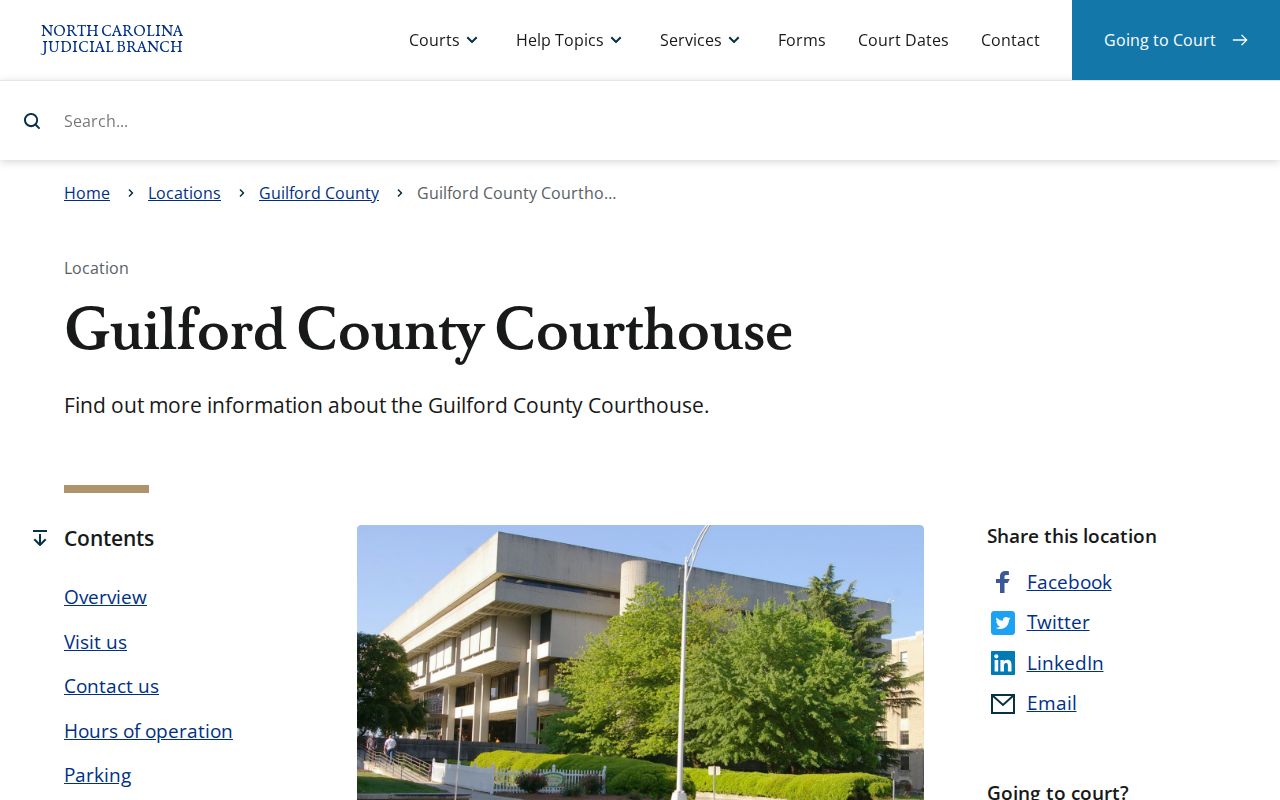
The courthouse counter supplements eCourts when a Guilford County criminal case requires a paper document, certified copy, or staff review.
Guilford County Case Record Searches
The North Carolina eCourts Portal provides free public case summaries. It is a strong first search, but the Judicial Branch says Portal is not its official background-check product. A certified, single-county name search uses form AOC-CR-314 and costs $25. Free courthouse terminals can search public criminal records statewide or by county; viewing and email are free, while prints may cost.
- Open Smart Search and enter a party name or known case number.
- Select Guilford County as the location and Criminal Actions as the category.
- Narrow by case type, status, or filing dates when the result list is broad.
- Open the Case Summary and Register of Actions, then read each charge-level disposition.
- Record the case number and contact the proper clerk for paper or certified documents.
| Field | Type | Required | Use |
|---|---|---|---|
| Smart Search | Text | Yes | Party name or case number |
| Search Type | Dropdown | No | Party, attorney, judicial officer, or record number |
| Location | Multiselect | No | Choose Guilford County to localize results |
| Case Category | Dropdown | No | Select Criminal Actions |
| Status and Filing Dates | Dropdown/dates | No | Narrow active or disposed cases by range |
Note: Portal works best in Edge or Chrome; official troubleshooting suggests clearing the cache or trying a private browser window.
Guilford County Portal Search Tips
Portal syntax can determine whether a Guilford County court case appears. Current criminal numbers use a two-digit year, the letters CR, a six-digit sequence, and a three-digit county identifier. Guilford's current identifier is 400, as in the format 21CR000003-400. Legacy and division codes may differ, so the clerk should confirm an older number.
For a partial case number, enter at least four characters followed by an asterisk. Name wildcards need at least three letters of the last name plus an asterisk and at least one letter of the first name plus an asterisk. The official Portal training source explains these fields and search rules.
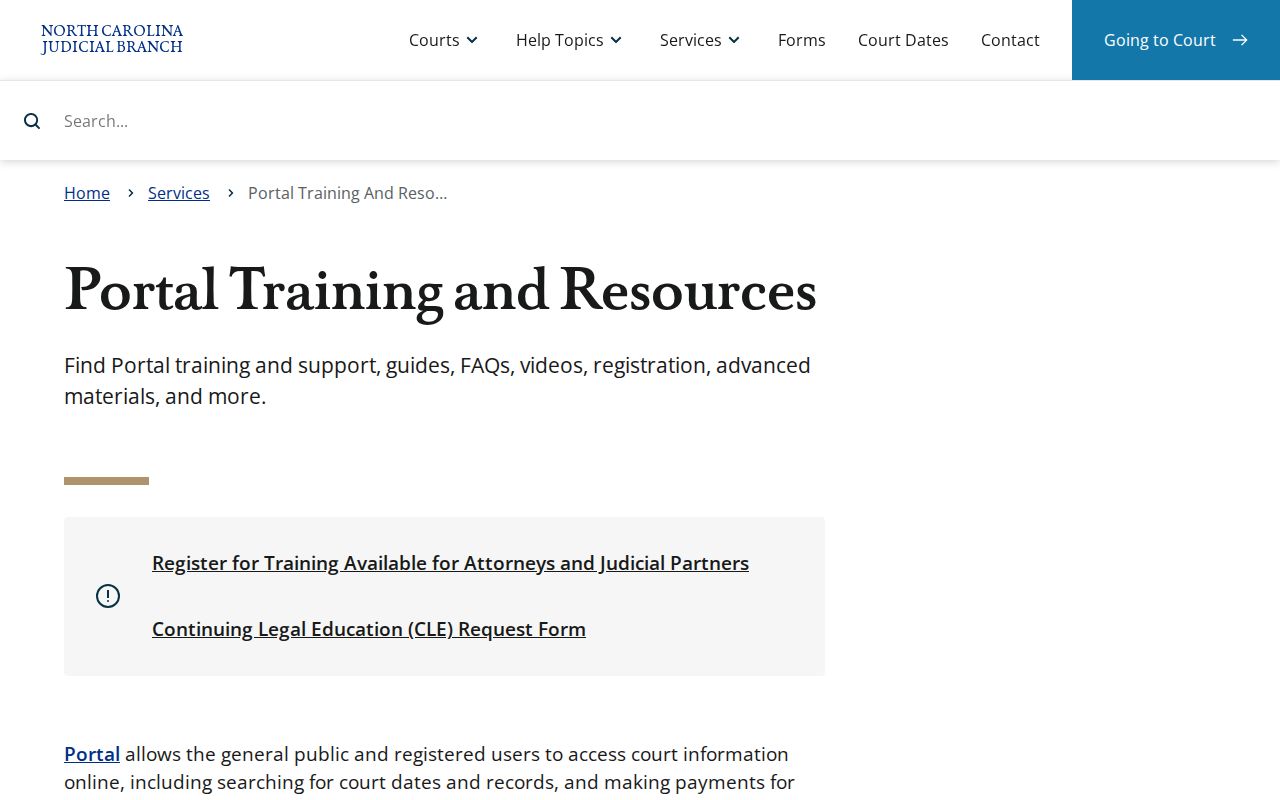
Using the location, category, status, and date controls together can separate Guilford County criminal records from same-name results elsewhere in North Carolina.
What a Criminal Case File Contains
A Guilford County case file answers what happened after a charge reached court. The online summary may show enough for a basic review, while the clerk's paper or document record supplies the filed source material that is public. Read charge-level entries carefully because one case can contain several charges with different outcomes.
| Case Number and Court | Filing year, criminal case sequence, county or division, case type, and status. |
|---|---|
| Parties and Counsel | The State, defendant, and public attorney information where available. |
| Charges | Filed offense descriptions or codes and each charge's current status. |
| Register of Actions | Dated filings, service, hearings, continuances, pleas, and court events. |
| Disposition and Judgment | Outcome for each charge, judgment details, and disposition date. |
| Sentence and Finances | Sentence terms plus public costs, fees, restitution, or supervision entries. |
The Portal may also provide Assignment, Hearing, and Financial Information panels. A listed hearing does not by itself show whether attendance is remote or in person. Confirm the current division and calendar through the Guilford administrative schedules.
Read Guilford County Case Outcomes
The Register of Actions is a timeline, not a verdict list. A filing, continuance, service event, or hearing can be important without deciding a charge. Look for the disposition attached to each offense and then the judgment. Common result words have distinct meanings.
- Dismissed
- The charge ended without a conviction.
- Not guilty
- The factfinder did not convict after adjudication.
- Convicted
- A judgment of guilt followed a plea or verdict.
- No bill
- The grand jury declined to return an indictment.
- Nolle prosequi
- The prosecutor formally chose not to proceed.
A court charge may also differ from the booking allegation because prosecutors can amend, replace, dismiss, or decline charges. For the intake event itself, consult the county Arrest Search; for the judicial outcome, rely on the clerk's case file.
Criminal Case Stages in Guilford County
North Carolina procedure separates custody, charging, trial, and judgment. A magistrate may issue process, conduct an initial appearance, and set release conditions. District Court handles misdemeanors and early felony matters. A felony proceeds to Superior Court after indictment or another lawful transfer. The district attorney controls prosecution, while the clerk records each public step.
Case flow: Charges Filed → Arraignment → Pretrial → Plea or Trial → Disposition → Sentencing
An appeal can add later entries. So can costs, compliance, or supervision events. Readers should check the newest dated entry and the charge-level outcome rather than infer a result from the first charge. The Judicial Branch criminal-case overview explains the statewide process.
Guilford Mental Health Court Records
Guilford County has operated a Mental Health Court since 2007. It serves eligible, nonviolent repeat defendants with mental-health, substance-use, or co-occurring needs. Official screening includes a district attorney public-safety review. The program is a case-management path within the court system, not a separate public search database.
The ordinary Guilford County criminal case file remains the place to review public events and outcomes. Program participation may shape scheduling and case activity, but confidential treatment facts do not become public just because the docket is public. North Carolina's Mental Health Court source describes the program model and lists Guilford among operational courts.
Guilford County Court Services supports more than the specialty docket. Its documented work includes first-appearance screening, verification, release monitoring, aging-case review, and referrals to Recovery Courts and reentry partners. Those services can affect how a case moves without creating a second public case file. The clerk's register of actions remains the record to check for public hearings, orders, dispositions, and judgment.
Note: A specialty-court path can change case management without changing which clerk maintains the public Guilford County court record.
Access Rules for Case Records
G.S. 7A-109 generally opens clerk-maintained criminal actions, judgments, minutes, and indexes during regular hours. Public access does not extend to every record. Juvenile matters, sealed or expunged files, unreturned warrants, protected victim information, and other confidential material may be hidden or redacted. Public Portal users see only the access level the law permits.
If a known Guilford County case does not appear, confirm spelling, wildcard syntax, case number, filing division, and case category. Next, use the courthouse public terminal or ask the correct clerk about a paper file. The official Guilford court directory supplies clerk, judge, district attorney, and magistrate contacts.
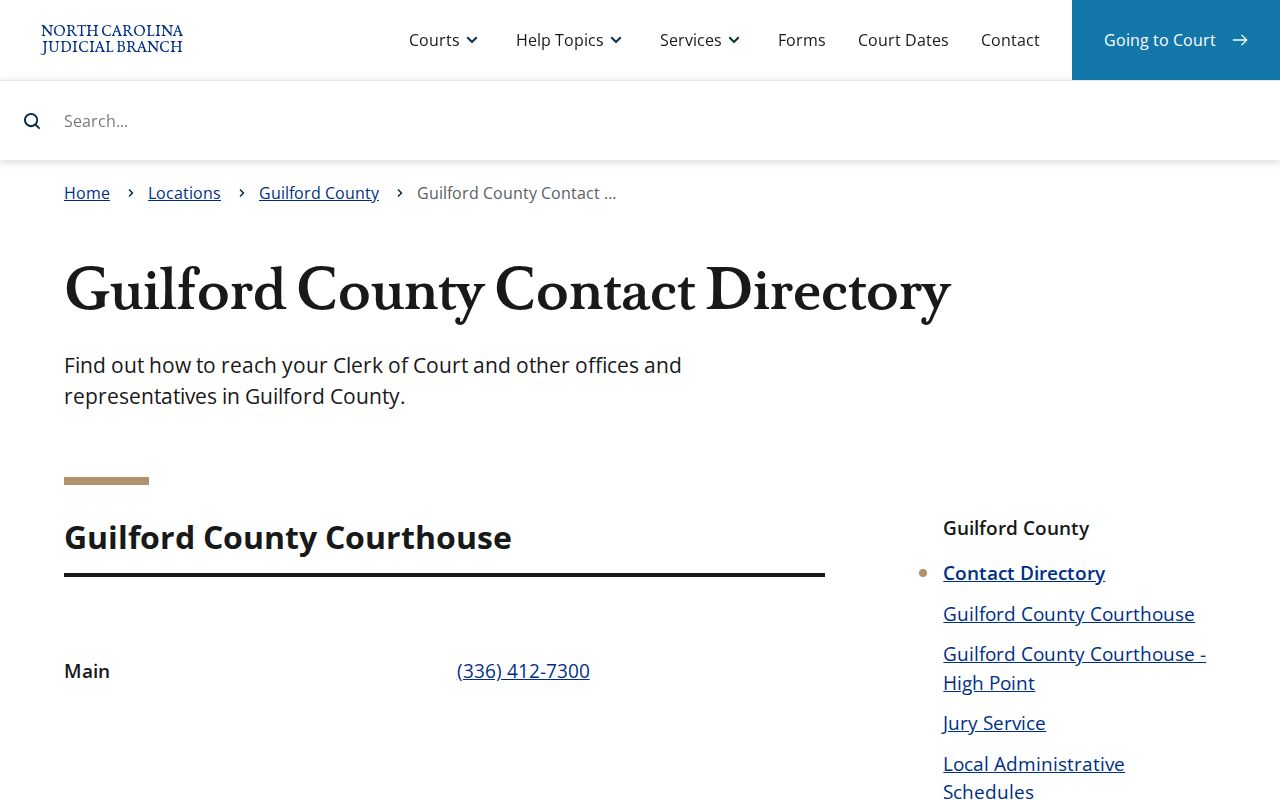
The directory helps route a missing or older court record to the proper Guilford County division rather than to the sheriff or county records portal.
Guilford County Criminal Docket Rules
Local orders govern District 24 details such as criminal docketing, pretrial release, and personal communication devices. Those rules can affect where a case appears on a calendar or what a visitor may bring into court. They do not replace the filed order, judgment, or clerk's record.
A December 5, 2025 administrative order amended Guilford County pretrial-release policy and is the current local source identified in the research. That makes an older general bail summary a poor substitute for the actual order and the release conditions entered in a specific case. Court calendars can change as well, so confirm the session, division, and courtroom through the current Judicial Branch schedule before relying on a saved docket.
The Guilford local rules and forms source is the right place to check current orders before relying on an old schedule or general bail summary.
Current local orders add needed context to the case record while leaving the Clerk of Superior Court as custodian of the Guilford County criminal file.